

Spanish Reading & Conversation
Stage 4 of our learning pathway, where conversation leaves the classroom: strong reading and everyday conversation, in private online classes.
¿Puedo contarte de mi día?
The kind of Spanish children practice at this stage
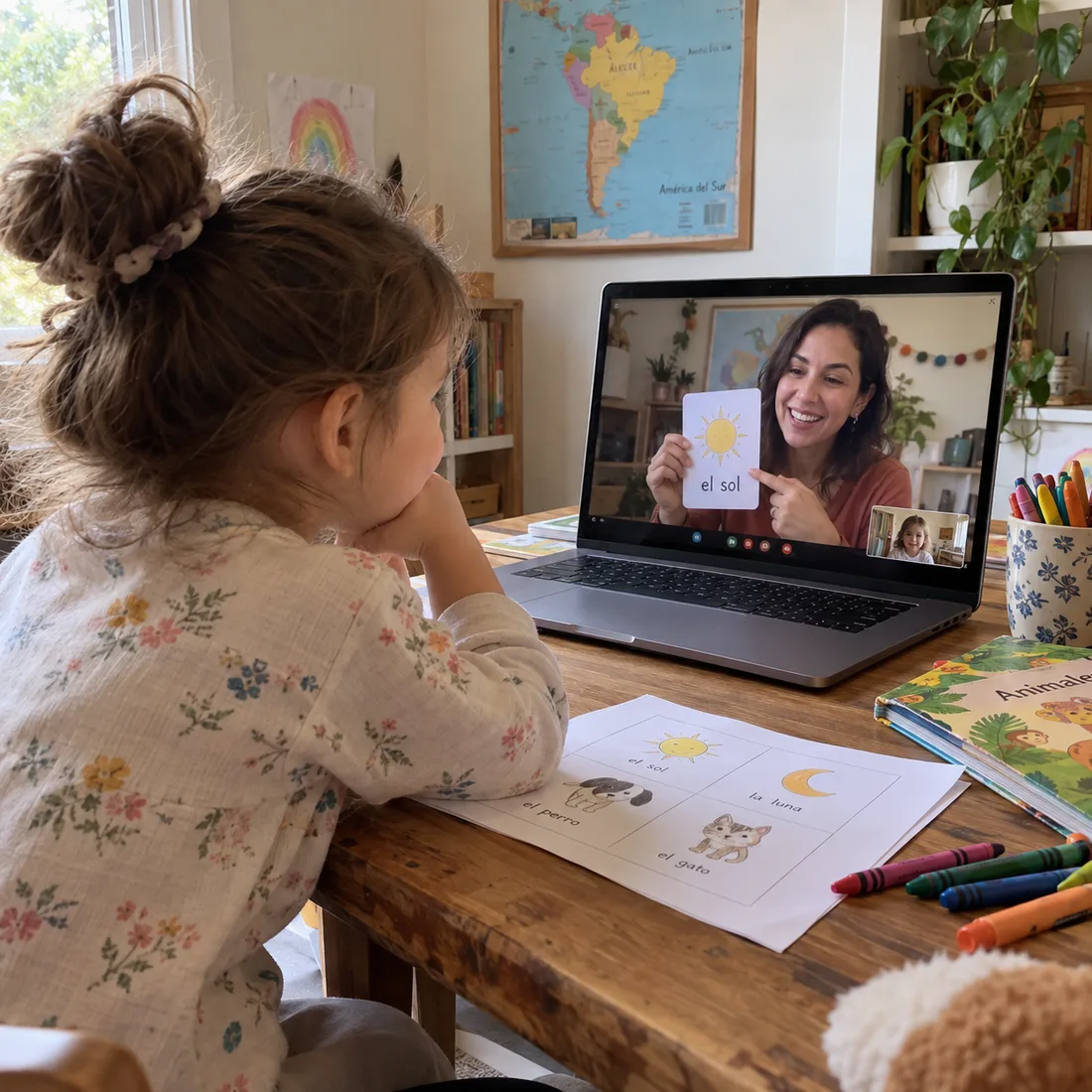
Watch a class preview
See what a Level 4 session feels like before you book.
What your child learns
This class is for students ready to build strong reading and comprehension skills in Spanish. Students learn to express themselves through daily conversations that take their Spanish outside the classroom and into the real world.
Reading and conversation is what we love most here at Spanish with Littles. Level 4 is for students who are reading, or working on their reading skills, and who are ready to start saying things nobody taught them to say.
We practice reading and writing throughout each class as we build real life connections to the material.
- Practice reading in a stress-free way
- Build real-life language skills by introducing sentence frames
- Make room for students to explore and experiment with speaking Spanish
- Learn grammar organically and conversationally, never by memorizing rules
- Focus on growth over perfection, and welcome every kind of participation
- Use multiple learning methods for different types of learners
- Learn sentence structures that build genuine confidence and independence
What a session looks like
Forty minutes with a reading block at its center. Everything before it builds the vocabulary the reading needs; everything after it puts that vocabulary into a conversation.
-
Greetings
-
Gather materials for class (when they are needed)
-
The theme song of the month
-
Introduce the new vocabulary
-
Practice the vocabulary with visuals, games, songs and coloring
-
Reading time
-
Review game
-
Sharing time (learn the word for what you brought and talk about it)
-
¡Adiós! Goodbyes
What lands in your inbox after class
The learning doesn't stop when the Zoom window closes, and the week between classes stays playful instead of turning into homework.
A Kahoot! game link
The same review game from class, to play again at home.
Printable PDF worksheet pages
Practicing every skill from that week's class.
A PDF of the class reader
The exact text your child read in class, so they can read it again to you.
What to have ready
- Printable PDF provided each week (or notebook paper)
- Crayons or markers
- A quiet learning Space
- A secondary device (phone or tablet for review game)
- An item from home for sharing time
A teacher who knows your child
Children build trust with a teacher who understands their personality, pace, and comfort level, and consistency creates confidence. Choose a recurring weekly appointment to keep the same teacher, day, and time each week.
Themes we cover in the year
Level 4 works through themed units, and each unit builds toward a review. Open a unit to see the vocabulary your child practices.
Mis Pasatiempos (My Hobbies)
- Pasatiempos
Hobbies - Deportes
Sports - Instrumentos
Instruments - Arte
Art - Otras actividades
Sacar fotos (take pictures), jugar videojuegos (play video games), ver la tele (watch TV), hacer rompecabezas (do puzzles)
¡Describir las cosas! (Describing Things)
- Personas y descripciones
yo (I), tú (you), él (he), ella (she), ser (to be), bajo/a (short), alto/a (tall) - Pelo
pelo (hair), rubio (blonde), castaño (brown), negro (black), rojo (red) - Ojos
ojos (eyes), azules (blue), verdes (green), negros (black), cafés (brown) - Describir a una persona
ojos (eyes), pelo (hair), alto/a (tall), bajo/a (short), tener (to have)
¡Comida! (Food)
- Repaso
Unit review - Desayuno
desayuno (breakfast), huevos (eggs), cereal (cereal), yogur y fruta (yogurt and fruit), comer (to eat) - Almuerzo
almuerzo (lunch), bocadillo (sandwich), sopa (soup), ensalada (salad) - Cena
cena (dinner), arroz (rice), pan (bread), espaguetis (spaghetti) - Postre
postre (dessert), pastel (cake), helado (ice cream), galletas (cookies) - Meriendas
Snacks - Repaso
Unit review
Celebraciones y Tradiciones (Celebrations and Traditions)
- Celebraciones
celebración, tradición, comunidad, fiesta - Elementos de una celebración
decoraciones, colores, comida típica, música - Celebrar juntos
familia, parranda, compartir, participar - Carnaval
carnaval, desfile, máscara, baile - Recordar y honrar
ofrenda, vela, flores, recuerdo - Repaso
Unit review
La Naturaleza (Nature)
- Los elementos de la naturaleza
árbol, río, montaña, ver - Los animales y sus hogares
pájaro, rana, jaguar, vivir - Las plantas y cómo crecen
flor, crecer, semilla, sol - El clima y los patrones del tiempo
lluvia, viento, hacer, nieve - Cuidar la naturaleza
reciclar, cuidar, tierra, basura - Repaso
Unit review
Los Lugares del Mundo (Places Around the World)
- Países y continentes
país, ciudad, mapa, visitar - Ciudades y pueblos
capital, pueblo, calle, caminar - Los monumentos y lugares importantes
monumento, museo, castillo, recorrer - Los lugares naturales del mundo
selva, desierto, isla, explorar - Viajar por el mundo
aeropuerto, tren, frontera, viajar - Repaso
Unit review
Aventuras en la Ciudad (Adventures in the City)
- En el aeropuerto
el avión, el pasaporte, la maleta, volar - En el restaurante
el menú, la bebida, la comida, pedir - En el museo
el cuadro, la estatua, el mapa, mirar - En el mercado
los alimentos (foods), el aseo (toiletries and personal care), el precio (the price), comprar (to buy) - Moviéndose por la ciudad
el mapa, la calle, la parada, ir - Repaso
Unit review
Historias Fantásticas (Fantastic Stories)
- Los superhéroes y sus poderes
el héroe/la heroína, el poder, la capa, poder - Más superpoderes y misiones
la fuerza, la velocidad, el malvado/la villana, rescatar - Los cuentos y las leyendas
el castillo, el dragón, la princesa/el príncipe, contar - Héroes y criaturas de leyendas latinoamericanas
el guerrero, la montaña, la luna, proteger - Los monstruos y las criaturas imaginarias
el monstruo, el gigante, el unicornio, transformar - Repaso
Unit review
Contando Historias y Compartiendo Opiniones (Telling Stories and Sharing Opinions)
- Cómo empieza una historia
la narración, el escenario, el personaje, imaginar - Lo que ocurre: acciones y secuencia
el suspenso, el giro, la pista, descubrir - Opiniones sobre cuentos, libros y películas
la reseña, el mensaje, la escena, opinar - Personajes culturales: historias de diferentes países
el viajero/la viajera, el sabio/la sabia, el desafío, guiar
Enroll weekly, $15 a week
Cancel or reschedule up to 24 hours before class through your WellnessLiving account. Want to try before you commit? Book the $1 starter class first.
What parents ask about Level 4
What if my child is shy or doesn't speak right away?
That's completely normal. We honor the quiet phase of language learning and gently encourage participation at each child's pace. Confidence grows naturally with consistency.
Can siblings learn together?
Yes! Siblings join free when they can learn together in the same session. As a general guideline, siblings should be within about 2–3 years of each other and at reasonably similar Spanish levels. Only one learner needs to be booked. Read the siblings policy.
Do parents need to speak Spanish?
Not at all. No prior Spanish knowledge is required. We provide guidance and reinforcement materials so families can support learning at home.
More questions? See the full FAQ.
Next on the path
Stage 4 is the top of the pathway. Stage 3 comes before it.
Hear them answer back. Start with a free class.
Book a free starter class, meet a teacher, and get a personalized recommendation for where your child should begin. No Spanish required from you.